

Sadeesha JayavirundugeEmpowering Wellbeing Through Ayurvedic and Remedial Massage.
"Sadeesha supports clients with musculoskeletal concerns through a client-centred approach, drawing on Ayurvedic principles and remedial massage techniques where appropriate to enhance comfort, functional movement, and overall wellbeing."
Therapeutic care, tailored to you.
Remedial Massage focuses on achieving therapeutic outcomes through a comprehensive assessment to identify the underlying cause of pain, tension, or movement restrictions.
A range of techniques may be used by the therapist to target muscles, tendons, and soft tissues, including deep tissue massage, trigger point therapy, myofascial release, muscle energy techniques, stretching, and joint mobilisation techniques.
These techniques aim to improve range of motion, reduce joint stiffness and muscle tension, enhance circulation to the tissues, release muscular tension, reduce pain, promote relaxation, and support the rehabilitation process.
Remedial Massage primarily targets affected areas, and a series of treatments may be recommended to achieve optimal improvement and recovery.
Remedial Massage may help with:
Promotes Relaxation
Full-body relaxation and deep tissue massage can help release tension, calm the body, promote physical and mental relaxation, and improve overall wellbeing.
Therapeutic treatment for:
- •Sports injuries — Massage therapy may support recovery by improving circulation, reducing muscle tension, enhancing flexibility, and assisting the rehabilitation process.
- •Symptoms of repetitive strain injuries (e.g. carpal tunnel syndrome, tennis elbow, golfer's elbow)
- •Chronic lower back pain, neck pain, shoulder pain, and stiffness associated with arthritis or previous injuries
- •Tension headaches, Migraine headaches and TMJ-related jaw muscle tension
- •Wry neck — helping reduce muscle tension and improve range of motion
Empowering Wellbeing Through Ayurvedic Care.
Ayurveda is an ancient system of medicine that originated in India and has gradually expanded around the world. The word Ayurveda means "the knowledge" or "science of life." It focuses on achieving balance and promoting overall health through an individualised approach to wellbeing.
The Five Elements
According to Ayurvedic philosophy, the universe and the human body are composed of five fundamental elements known as Panchamahabhuta.
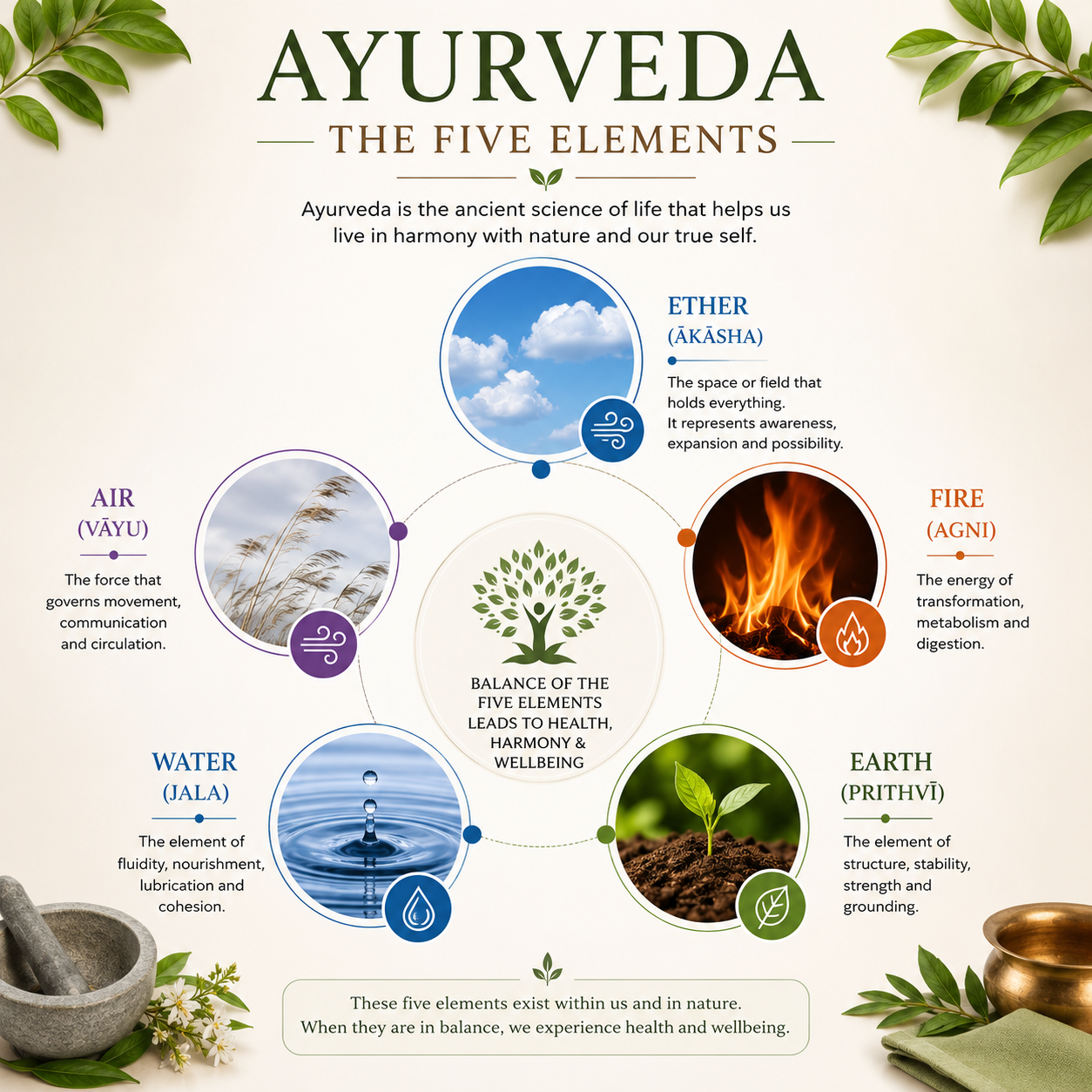
These five elements combine in different proportions to form each individual's unique constitution and influence physical, mental, and emotional wellbeing.
Your natural constitution.
Prakriti refers to an individual's natural body constitution, which is believed to be established at birth. It represents a person's unique physical, mental, and emotional characteristics.
Ayurveda focuses on individualised care through an initial consultation to better understand a person's health and wellbeing needs. Some individuals may have one dominant dosha, while others may have a combination of doshas.
Balance described.
Vata
Associated with movement and communication.
Pitta
Associated with metabolism and transformation.
Kapha
Associated with structure and stability.
Understanding imbalance.
Vikriti describes the current state of imbalance within the body and explains how the doshas may become altered due to factors such as lifestyle, diet, stress, emotions, environmental influences, and physical or mental factors.
This understanding helps guide a personalised approach to supporting health and wellbeing.
Step inside the sanctuary.
Reserve your treatment and we'll prepare a quiet room, warm linens, and the right dosha-balancing oils for the day you've had.